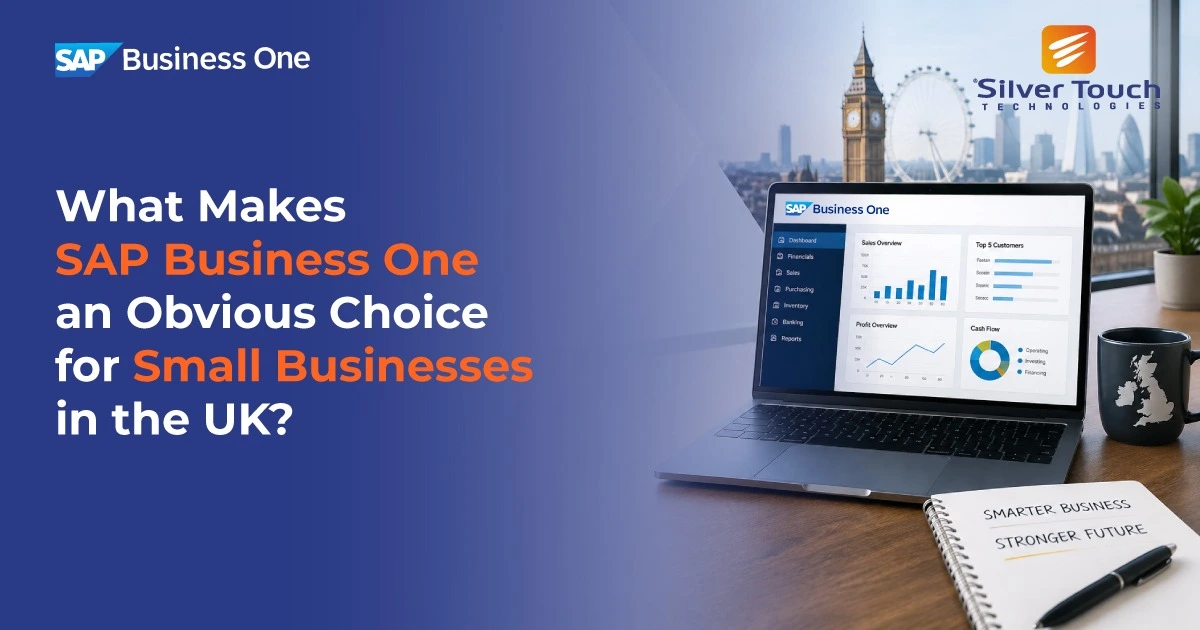

How to Select the Right SAP Business One Partner in UK? Things to Consider
When it comes to streamlining various processes and having greater control over your business, SAP Business One comes to the ...
Growth is often seen as the ultimate goal for any small business. More customers, more revenue, more opportunities it all sounds ideal. But in reality, growth brings complexity.
For many small and mid-sized businesses (SMEs) in the UK, the real challenge isn’t finding new business. It’s managing operations efficiently as the business expands. What once worked spreadsheets, basic accounting tools, disconnected systems begins to slow everything down.
Financial data becomes harder to track. Inventory loses accuracy. Reporting takes longer than it should. And decisions are made based on outdated information.
This is the stage where businesses don’t just need better tools they need a smarter system.
That’s where SAP Business One (SAP B1) becomes an obvious choice.
In the early stages, most businesses operate with simple systems. A combination of accounting software, Excel sheets, and manual processes is usually enough to get by.
But as operations grow, these systems start to show their limits.
Teams spend more time reconciling data than using it. Information sits in silos, making it difficult to get a complete picture of the business. Small errors turn into bigger issues. And by the time insights are available, they’re often too late to act on.
This lack of visibility doesn’t just affect operations it impacts decision-making at every level.
What UK SMEs truly need at this point is not more tools, but better integration and real-time clarity.
One of the key reasons SAP Business One stands out is its ability to bring everything together.
Instead of relying on separate systems for finance, sales, inventory, and operations, SAP B1 integrates all core business functions into a single platform.
This creates a “single source of truth” across the organisation.
When a sale is made, inventory updates automatically. Financial records are adjusted in real time. Reports reflect the latest data without requiring manual input.
The result is a business environment where information flows seamlessly, reducing duplication, eliminating errors, and improving overall efficiency.
For small businesses, this level of integration is not just convenient it’s transformative.
Cash flow is one of the most critical factors for any small business in the UK.
Yet, many businesses still rely on delayed reports or manual calculations to understand their financial position.
SAP Business One changes that by providing real-time financial visibility.
Business owners and decision-makers can instantly access profit and loss statements, cash flow insights, and outstanding receivables and payables.
This level of transparency allows businesses to move from reactive decision-making to proactive planning.
Instead of asking “What happened last month?”, leaders can focus on “What should we do next?”
That shift alone can significantly impact growth and stability.
Operating in the UK comes with its own set of regulatory and financial requirements.
From VAT reporting to audit readiness, compliance is not something businesses can afford to overlook.
SAP Business One is designed to support these requirements without adding unnecessary complexity.
It enables accurate VAT handling, ensures proper financial documentation, and supports multi-currency transactions for businesses engaged in international trade.
This means businesses can stay compliant while maintaining efficiency without relying on multiple tools or manual workarounds.
One of the most common challenges SMEs face is outgrowing their existing systems.
A tool that works well for a small team may struggle to handle increased data, additional users, or more complex operations.
This often leads to system changes, which can be costly and disruptive.
SAP Business One is built with growth in mind.
Whether a business expands its team, opens new locations, or increases transaction volumes, the system adapts without requiring a complete overhaul.
This scalability makes it a long-term investment rather than a short-term solution.
It allows businesses to focus on growth without worrying about whether their systems can keep up.
As businesses grow, there is often a temptation to solve problems by adding more people or more tools.
However, this approach can increase costs without addressing the root cause of inefficiencies.
In many cases, the real issue lies in disconnected processes and manual workflows.
SAP Business One helps streamline operations by automating routine tasks and connecting different parts of the business.
This reduces the need for repetitive data entry, minimises errors, and frees up time for more strategic work.
Teams can focus on activities that drive value, rather than spending hours managing data.
For SMEs operating in competitive UK markets, this kind of efficiency can make a significant difference.
In today’s business environment, speed matters.
Opportunities don’t wait, and neither do challenges.
Businesses that can respond quickly to changes in demand, supply chain disruptions, or financial fluctuations are more likely to succeed.
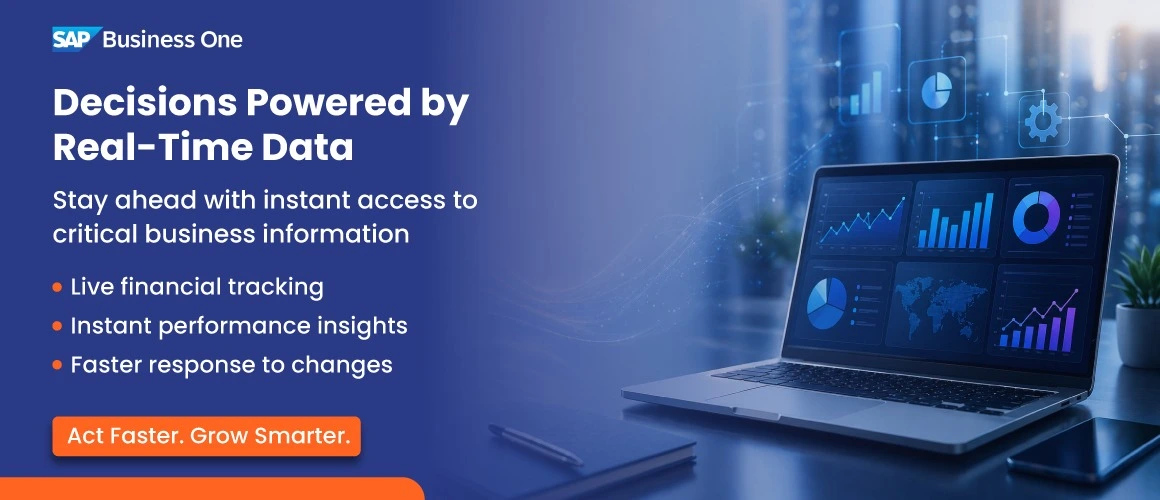
SAP Business One supports faster decision-making by providing accurate, real-time data.
Leaders can monitor performance, identify trends, and address issues before they escalate.
This ability to act quickly with confidence is one of the biggest advantages a business can have.
Every growing business reaches a point where its existing systems start to hold it back.
The signs are clear delayed reports, disconnected data, operational inefficiencies.
At that stage, the question is no longer whether change is needed, but what kind of system can truly support the next phase of growth.
SAP Business One stands out because it addresses the core challenges small businesses face not just with features, but with a practical, integrated approach.
It simplifies complexity, improves visibility, and creates a strong foundation for sustainable growth.
For small businesses in the UK looking to move forward with confidence, it’s not just an option.
It’s an obvious choice.

An experienced business leader, heads the UK operations of Silver Touch Technologies Ltd. With 15 years of experience in the industry, he has set the track record of delivering transformation and revenue growth with SAP Solutions.