

How SAP Business One Solutions Improve the B2B Experience for Your Customers
Since its initial release in April 2002, SAP Business One (SAP B1) keeps on evolving to serve modern SMEs. It aims to take bu...
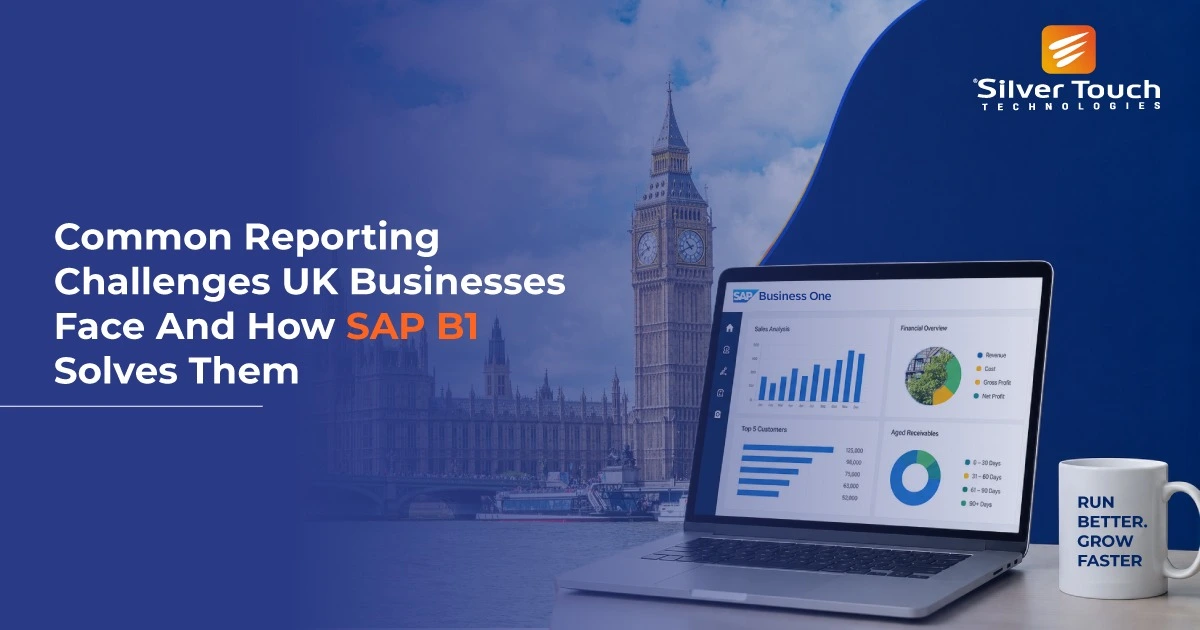
For many growing businesses across the UK, reporting has become more complicated than ever. Companies are expected to make faster decisions, manage compliance requirements, track business performance in real time, and respond quickly to changing customer demands. However, many organisations still rely on spreadsheets, disconnected systems, or manual reporting processes that slow everything down.
Whether it’s finance teams spending hours preparing monthly reports, managers struggling with inaccurate data, or business owners lacking visibility into operations, reporting challenges can directly impact productivity and profitability.
This is where SAP Business One makes a significant difference. Designed specifically for small and mid-sized businesses, SAP Business One provides integrated reporting and analytics tools that help UK businesses gain real-time visibility, automate reporting processes, and make smarter business decisions.
In this blog, we explore the seven most common reporting challenges UK businesses face and how SAP Business One helps solve them efficiently.
Business reporting is no longer limited to monthly financial statements. Modern UK businesses need quick access to accurate information to manage operations, customer demands, and financial performance effectively.
Without reliable reporting systems, businesses often experience delayed decision-making, reduced visibility across departments, compliance concerns, and difficulties scaling operations efficiently.
As competition continues increasing across industries, having access to real-time business insights has become essential for sustainable growth. For UK businesses embracing digital transformation, a reliable ERP reporting system is becoming essential rather than optional.
One of the biggest challenges many UK SMEs face is the amount of time spent creating reports manually. In many organisations, employees export data from multiple systems into Excel spreadsheets, combine information manually, and spend hours formatting reports before management meetings. This process is not only time-consuming but also increases the risk of human error.
Common problems with manual reporting include:
Duplicate data entry
Spreadsheet errors
Outdated information
Delayed reports
Inconsistent formatting
Difficulty tracking changes
For businesses handling large volumes of transactions, manual reporting quickly becomes unsustainable.
SAP Business One automates reporting by pulling live data directly from a centralised ERP system. Instead of relying on spreadsheets, businesses can generate financial reports, sales reports, inventory reports, profitability analysis, customer insights, and VAT-related reports with just a few clicks.
Real-time dashboards and automated reporting tools help teams save valuable time while improving accuracy. This allows employees to focus more on strategic tasks rather than administrative work.
Many UK businesses struggle because they don’t have access to real-time information. By the time reports are prepared manually, the data may already be outdated. This creates delays in decision-making and makes it difficult for leadership teams to respond quickly to business changes.
For example, stock shortages may go unnoticed, sales trends may be identified too late, cash flow issues may escalate, and customer demand changes may not be tracked properly. In today’s competitive environment, delayed visibility can significantly impact growth.
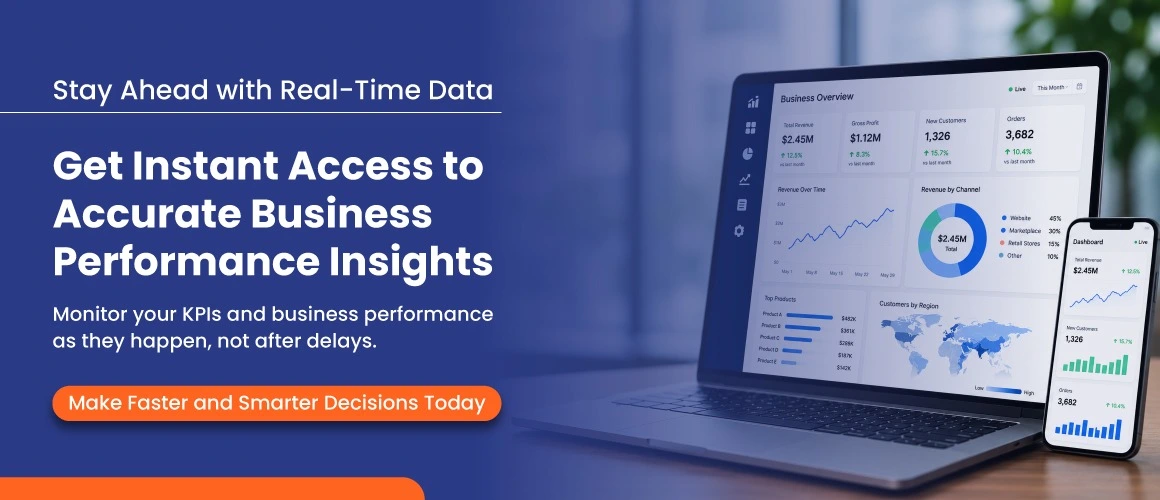
SAP Business One provides real-time reporting and live dashboards that give businesses instant access to critical data. Managers can monitor sales performance, inventory levels, financial health, customer activity, and operational KPIs from a single system.
With real-time visibility, UK businesses can make faster and more informed decisions. This is especially valuable for businesses operating across multiple locations or managing hybrid work environments.
Another major reporting challenge is using multiple disconnected systems. Many businesses use separate tools for accounting, CRM, inventory management, purchasing, payroll, and reporting. When systems don’t communicate properly, businesses often experience inconsistent data across departments.
This leads to confusion, duplicated work, and unreliable reports. For example, finance teams may see different sales figures than the sales department, creating trust issues around data accuracy.
SAP Business One integrates core business functions into one unified ERP platform. This means all departments work from a single source of truth. When sales, finance, inventory, and operations are connected, reporting becomes far more accurate and reliable. Businesses no longer need to reconcile information from multiple systems manually.
Key benefits include improved collaboration, better data consistency, faster reporting, more accurate forecasting, and increased operational efficiency. For growing UK businesses, this integration is essential for scaling operations smoothly.
UK businesses must comply with various financial and tax regulations, including VAT reporting requirements. Managing compliance manually can be stressful and risky. Errors in financial reporting may lead to compliance penalties, audit complications, financial inaccuracies, and reputational damage.
As regulations continue evolving, businesses need systems that support accurate and transparent reporting.
SAP Business One helps businesses streamline financial reporting and improve data accuracy across the board. The system supports VAT reporting, financial statements, audit trails, automated calculations, and full transaction tracking.
With better visibility into financial data, businesses can reduce reporting risks and improve compliance readiness. Automated reporting also takes significant pressure off finance teams during month-end and year-end reporting periods.
Many businesses struggle because their existing reporting tools cannot provide the insights they actually need. Generic reports often fail to deliver meaningful business intelligence, because different departments require fundamentally different types of reporting.
Finance teams need profitability analysis, sales teams need pipeline visibility, operations teams need inventory tracking, and executives need high-level dashboards. Without flexible reporting tools, businesses end up relying heavily on manual adjustments that defeat the purpose of having a reporting system at all.
SAP Business One offers flexible reporting capabilities that allow businesses to build reports tailored to their specific needs. Users can create department-specific reports, interactive dashboards, KPI summaries, performance overviews, and custom analytics views all without relying on IT support for every change.
This flexibility helps businesses gain deeper insights while improving decision-making across teams. Instead of forcing strategy to fit rigid reports, companies can shape reporting around their actual operational goals.
Read More: Top Benefits of SAP Business One for Small Businesses UKMany businesses struggle to forecast accurately because their reporting processes rely on outdated or incomplete data. Without reliable insights, planning inventory, managing cash flow, and identifying growth opportunities all become guesswork rather than informed decisions.
When leadership cannot trust the numbers in front of them, confidence in strategic planning drops and businesses end up reacting to problems rather than preventing them.
SAP Business One improves forecasting by providing real-time business data and powerful analytics tools that support faster, more confident decisions. Instead of reacting to problems after they have already escalated, businesses can plan proactively using accurate operational and financial insights available at any moment.
As businesses expand, reporting becomes more complex. Higher transaction volumes, multiple locations, and growing teams often make manual reporting difficult to manage. Yet this is precisely the point at which accurate reporting becomes most critical and most difficult to maintain without the right systems in place.
SAP Business One is designed to scale alongside business growth, helping organisations maintain accurate reporting and full operational visibility at every stage of expansion. Cloud access and centralised reporting make it straightforward for distributed teams to collaborate across locations without sacrificing data consistency or control.
The biggest advantage of using SAP Business One is not just faster reporting it is the ability to make better business decisions with genuine confidence. When businesses have access to accurate, real-time information, teams can respond more quickly to operational issues, customer demands, and financial challenges before they become costly problems.
Instead of spending hours collecting and cleaning data manually, employees can focus on improving productivity, delivering better customer service, and driving overall business performance.
Long-term benefits for UK SMEs include:
Improved visibility across all departments
Faster and more accurate decision-making
Better financial control and compliance readiness
Increased operational efficiency
Stronger forecasting and proactive planning
More scalable and sustainable business processes
As businesses continue growing, reliable reporting tools become the backbone of maintaining efficiency and staying competitive. SAP Business One helps organisations build a stronger foundation for future growth by turning raw business data into meaningful, actionable insights.
More UK businesses are investing in ERP reporting solutions to improve visibility, reduce manual work, and support faster decision-making. SAP Business One helps SMEs move away from disconnected systems and outdated spreadsheets by providing one central platform for all business reporting and analytics needs.
With increasing competition and rising customer expectations, businesses that can access reliable information quickly will always have an edge over those still waiting for last week’s data to be compiled.
Reporting challenges can quietly slow down business growth, reduce team productivity, and limit visibility across the entire operation. From manual spreadsheets and disconnected systems to delayed reporting and unreliable forecasting, many UK businesses carry reporting inefficiencies that compound silently over time.
SAP Business One addresses these challenges directly with integrated, real-time reporting capabilities that improve accuracy, visibility, and decision-making at every level of the organisation. By automating reporting processes and centralising business data onto a single platform, it enables organisations to operate more efficiently while building the foundation needed for sustainable future growth.
For UK SMEs ready to modernise operations, improve reporting accuracy, and make smarter business decisions, investing in the right ERP reporting solution is one of the most impactful long-term steps a business can take.
SAP Business One reporting includes dashboards and analytics tools that help businesses track financial, sales, and operational performance in real time.
Yes, SAP Business One can automate reporting processes, helping businesses reduce manual work and improve reporting accuracy.
ERP reporting helps businesses improve visibility, make faster decisions, and manage operations more efficiently.

An experienced business leader, heads the UK operations of Silver Touch Technologies Ltd. With 15 years of experience in the industry, he has set the track record of delivering transformation and revenue growth with SAP Solutions.